
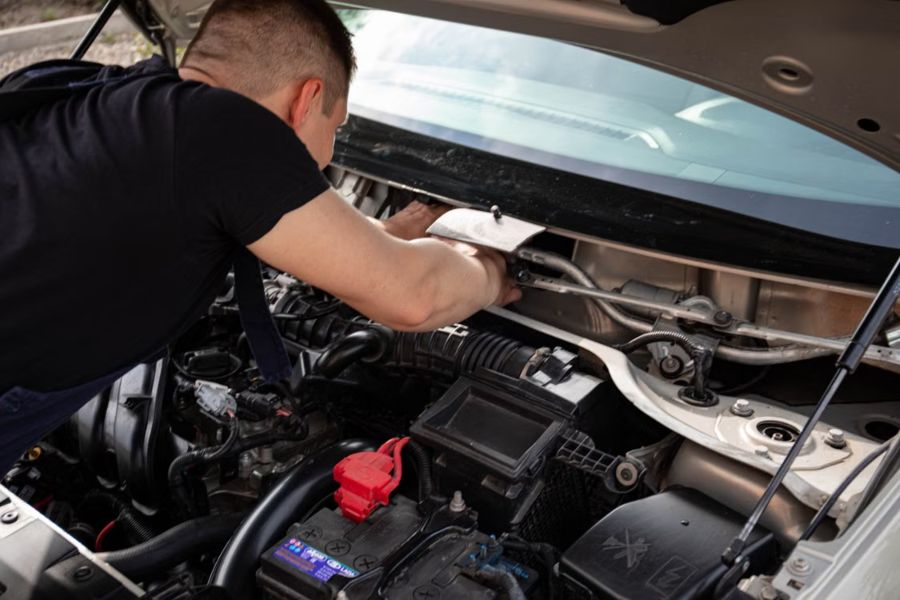
Repairs are an inevitable part of owning a car. Whether it is routine servicing for regular wear and tear or emergency repairs after an accident, you may end up visiting a repair center more often than you would have assumed at first.
The good news is that modern automobile servicing and maintenance is much more advanced than it used to be. Professional training and diligent care help your automobile enjoy a longer life and remain in good health.
Even so, as a car owner, it is best to stay vigilant to ensure that any repairs are thorough and sustainable. A February 2024 study published in the Journal of Safety Research found that post-repair issues have become more prevalent after work done on crash-avoidance systems.
This is regardless of the type of feature that underwent repair. Such issues are not only expensive and frustrating to deal with but also pose a safety hazard. Stay watchful of the red flags we have identified below.
The Steering or Tires Feel Off
You know how your car feels. If something seems off when you drive, chances are you need to look more thoroughly. Is your vehicle pulling to one side when steering? Perhaps your repair center did not complete the work properly.
It could be an off-center steering wheel, which can become a high-risk factor when driving in busy areas. Another possibility you must get rectified? Uneven tire tread.
If your car’s tires are not aligned properly, your vehicle may veer or pull to one side. It can hamper the driving experience. It can also be highly unsafe, making the vehicle more vulnerable to damage.
A 2025 peer-reviewed study published in Tribology International noted that tire tread wear is connected to the car’s load, speed, and friction. Uneven or excessive wear can compromise any of these aspects. This can endanger your vehicle and its occupants by reducing traction and affecting vehicle handling.
You Witness Strange Lights or Noises
It sounds straight out of a horror movie, probably a corny one. But ignoring odd lights and sounds in your vehicle after repairs can be a huge oversight.
For example, check if your airbag lights stay on. Do you keep getting ADAS (driver assistance) warnings? Perhaps you notice a persistent stability control notification.
All these signs can indicate that the repair team missed an underlying problem. A likely possibility is that they did not recalibrate ADAS systems after repairs. This is often necessary after any work involving front-end collisions, bumpers, or windshields.
A Collision Repair Mag feature highlights that ADAS-related work is becoming common in vehicle repairs. Some surveys indicate that over 60% of repairs now require calibration.
The sector has started to view these calibrations as routine, but many centers are struggling to keep pace with them. Without them, your car may falter in the safety provisions related to automatic emergency braking or blind spot monitoring.
Similarly, unusual noises are often linked to improper sealing or misaligned parts. The chances of these oddities increase if the team isn’t trained for conducting structural repairs.
The Paint Appears Mismatched
Even otherwise mild car accidents can leave your vehicle’s paint chipped. It may seem like an aesthetic issue, but it is also one that sticks with you. It impacts you whenever you go out for a drive.
Here’s the bigger problem: paint issues can signal that the repairs were inconsistent or that the team was careless about managing evident damage. If this highly visible problem was not attended to adequately, what does it say about deeper issues that directly impact crash safety?
Unfortunately, paint mismatches are not uncommon. You may spot them as overspray or patchiness in certain areas.
The Repair Center Does Not Share Documentation
If you faced a car accident that triggered substantial vehicular damage, the list of repairs can be extensive. From structural work to internal machinery and aesthetic touchups, there’s a lot you may need to address. The repair workshop must share information on the work done, including it in an itemized invoice.
Additionally, it should also provide:
- List of parts changed or repaired.
- ADAS calibration records
- Repair warranty
These details will be essential for seeking financial compensation from your insurer. Depending on your local regulations, you may be eligible for compensation from the party responsible for the damage.
Some US states have noted an increase in the number of crashes resulting in serious injuries and damage. In Ohio, the number of crashes in 2025 was over 255,000. The city of Toledo has launched a special project called Vision Zero in partnership with the Ohio Department of Transportation to reduce roadway fatalities by 2031.
A Toledo car accident attorney can help victims document the damage and necessary repairs. This takes them a step closer to receiving timely financial compensation.
Zoll & Kranz, LLC explains that professional counsel can help people to deal with life-changing consequences stemming from someone else’s negligence and fault. Being thorough with documentation is vital where serious injuries are involved, both to you and your vehicle.
Consider Getting a Second Opinion for Assurance
If you notice any of these red flags, it is important to take prompt action. The repair center should re-inspect and take the necessary steps to rectify the oversights. Even after they do this, you should consider getting another opinion. It is best to take this extra precaution to avoid the risk of a dangerous judgment error or carelessness.
For perspective, did you know that counterfeit airbag parts are responsible for injuring many drivers in the US? The National Highway Traffic Safety Administration has noted the rising number of incidents and issued a warning against faulty or substandard replacement airbags. These poor-quality airbags can injure people during deployment.
“The scary part is we don’t know how many of them are out there, so we don’t necessarily know how they are getting into a lot of the vehicles, but the cases we do know are repair shops buying vehicles, fixing them and putting them out in the market as used vehicles.” – Bob Stewart, President, Automotive Anti-Counterfeiting Council.
Just think of the possible risk you may be undertaking by ignoring a warning light that won’t go out or a misalignment that feels like a minor inconvenience.
FAQs
1. Can improper car repairs make a car unsafe after an accident?
Yes. Your vehicle may look repaired, but still have unresolved safety issues. Improper repairs can compromise your car’s structural components, airbags, seat belts, steering, and much more.
2. What happens if the repair shop skips ADAS calibration?
You may see issues such as false warnings and lane-keeping errors. Over time, your car may fail to detect hazards and provide incorrect braking assistance. Overall, you will experience a marked reduction in the effectiveness of crash-avoidance features.
3. How can I choose trustworthy collision repair professionals?
Your best bet is to work with professionals who explain the repair process and share detailed estimates. The team must adhere to manufacturer-approved repair procedures and use proper equipment.
Improper Car Repairs Warning Signs: Quick Recap
| Sign | What it may indicate |
| Vehicle pulls to one side or steering feels different | Incorrect wheel alignment, suspension issues, steering component damage, or incomplete repairs |
| Uneven tire tread wear after repairs | Misalignment, damaged suspension parts, improper tire installation, or unresolved collision damage |
| Airbag warning light stays on | Faulty airbag system repair, damaged sensors, wiring problems, or incomplete replacement |
| ADAS warnings appear (lane assist, collision warning, adaptive cruise control) | Missing or incorrect calibration of cameras, radar sensors, or safety modules |
| Strange noises after repairs | Loose components, improper installation, poor sealing, suspension problems, or alignment issues |
| Doors, hood, trunk, or body panels do not align properly | Poor body repair, incorrect panel installation, or possible structural repair issues |
| Paint mismatch, overspray, or uneven finish | Poor refinishing work, rushed repairs, or inconsistent workmanship |
| Missing repair documents or invoices | Lack of transparency about parts replaced, procedures performed, or safety checks completed |
| No ADAS calibration report after relevant repairs | Safety systems may not have been recalibrated after collision damage, windshield replacement, or sensor work |
| Vehicle vibrates, shakes, or feels unstable | Wheel imbalance, suspension damage, tire problems, or incomplete collision repairs |
| Repair shop cannot explain what parts were used | Unknown replacement parts, missing OEM procedures, or incomplete repair information |
Looks Are Only Skin Deep
A common mistake in car repairs is assuming everything is fine if it appears fine. However, cosmetic perfection is not a reflection of crash safety. This is possibly the most important lesson for us as vehicle owners and drivers.
Red flags may be bold and stark or vague and flickering. When in doubt, seeking an expert opinion (or two) is always a good idea.
