
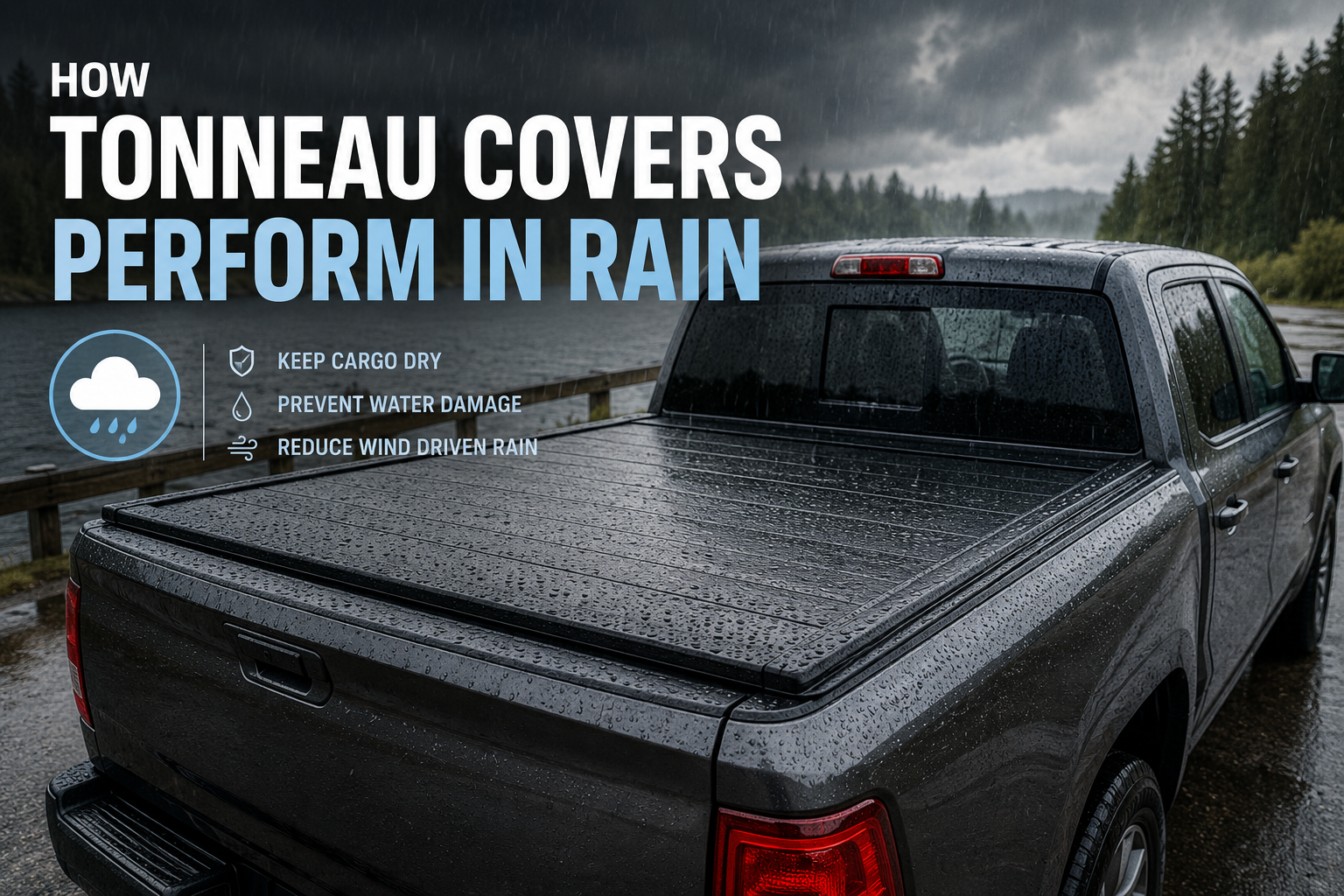
If you’re wondering whether a tonneau cover actually keeps rain and snow out of your truck bed, the short answer is yes. A well fitted, quality tonneau cover significantly reduces water and snow intrusion, though the level of protection depends on the cover type, seal quality, and installation. Here’s what you need to know before relying on one for wet weather hauling.
Do Tonneau Covers Keep Water Out?
Most modern tonneau covers are designed with weatherproofing in mind. Hard folding and roll up covers typically use rubber seals along the edges, while soft vinyl covers rely on snap or clamp systems paired with a tight fit. When properly installed, these covers create a barrier that stops the majority of rain and snow from reaching your truck bed. For anyone focused on keeping truck bed cargo dry through changing weather, understanding these seal and fit differences is the first step, since “water resistant” and “waterproof” aren’t always the same thing. Some budget covers may allow minor seepage during heavy storms or when snow accumulates and melts on top of the cover.
Hard vs. Soft Tonneau Covers in Wet Conditions
Hard tonneau covers, whether folding or one piece, generally perform better in snow because they can support light accumulation without sagging, and their rigid seals resist wind driven rain more effectively. Soft covers are lighter and often more affordable, but in heavy snow, the material can stretch or pool water if not tensioned correctly. If you live somewhere with frequent snowfall, a hard cover is usually the safer long term investment.
What Affects a Tonneau Cover’s Weatherproofing?
A few factors determine how well a cover performs:
- Seal quality: Covers with double or triple layer rubber seals around the perimeter block more water than single seal designs.
- Installation accuracy: Even a high end cover will leak if it’s not mounted flush against the bed rails.
- Material type: Aluminum and fiberglass hard covers tend to resist warping better than soft vinyl in extreme cold.
- Drainage design: Some covers include built in channels that direct water away from the bed rather than letting it pool.
It’s worth checking whether the cover you’re considering includes drainage channels and a full perimeter seal, since these two features matter more than price point alone.
Can Snow Damage a Tonneau Cover?
Light to moderate snow generally isn’t a problem for most hard covers, but heavy accumulation can stress soft covers or cause pooling on flat designs. It’s a good habit to clear snow off the cover periodically, especially with roll up or folding styles, to prevent sagging or seal strain over time. Ice buildup around the edges can also make some covers harder to open until it thaws, so factor that into your routine if you’re loading or unloading frequently in winter.
Are All Tonneau Covers Truly Waterproof?
Not entirely. Even the best covers aren’t submersion proof and aren’t designed to handle standing water or a fully flooded bed. They’re built to shed rain and snow, not seal like a hatch on a boat. If you’re transporting moisture sensitive cargo, pairing your cover with a waterproof tarp or storage container adds an extra layer of protection during severe weather.
Bottom Line
A quality tonneau cover is one of the most effective ways to protect your truck bed from rain and snow, especially when it includes solid seals, proper drainage, and a snug fit. Hard covers tend to outperform soft ones in snow heavy climates, while both styles can struggle if installation isn’t precise. Investing in a well reviewed, weather rated cover, and maintaining it properly, makes a noticeable difference over time.
