
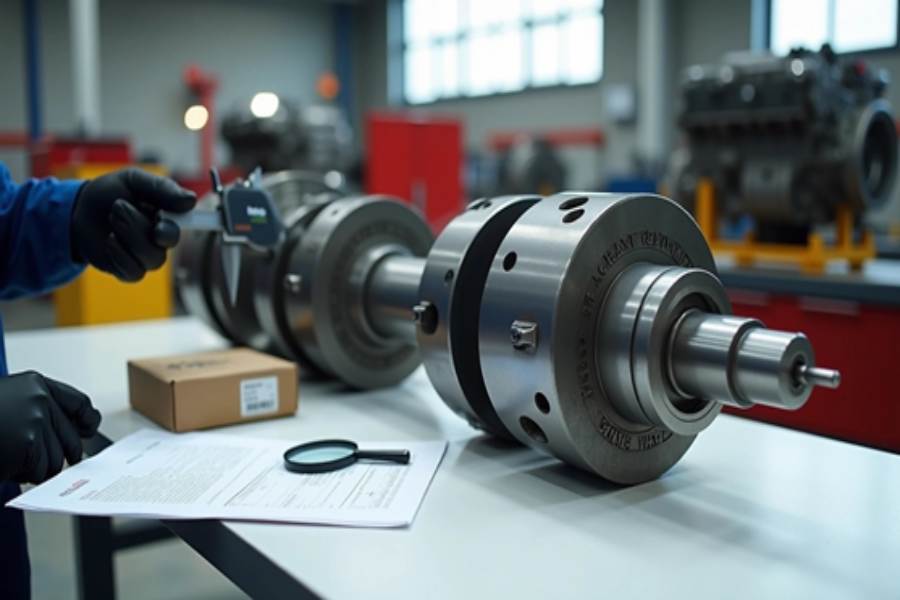
You need to identify a genuine Isuzu crankshaft because counterfeit or substandard parts can lead to catastrophic engine failures costing thousands in repairs. The market offers various options like new, remanufactured and used crankshafts, and this makes it challenging to distinguish authentic components from inferior alternatives.
You might be replacing an Isuzu crankshaft yourself or working with mechanics who need an isuzu crankshaft seal installer or isuzu crankshaft rear oil seal installer. Understanding authenticity markers protects your investment either way. We’ll walk you through the identification methods, verification techniques and trusted purchasing sources that ensure you get a reliable crankshaft. This keeps your Isuzu engine running strong for years.
Understanding Genuine vs Aftermarket Isuzu Crankshafts
OEM stands for Original Equipment Manufacturer, meaning genuine Isuzu crankshafts are produced either by Isuzu itself or manufacturers contracted to build parts matching factory specifications. These components are similar to what came installed in your engine from the assembly line and guarantee perfect fitment and compatibility.
Aftermarket crankshafts come from third-party manufacturers not affiliated with Isuzu. The pricing difference between these options is substantial. OEM parts cost 65% more than aftermarket alternatives [1], while some aftermarket options can be 20 to 50% less than comparable genuine parts [2]. This price gap exists because you’re paying for guaranteed compatibility and the manufacturer’s quality checks with OEM components.
Quality variation represents the biggest problem with aftermarket crankshafts. Some manufacturers produce parts that meet or exceed OEM specifications and occasionally improve on original designs to address known weaknesses. Others cut corners on materials and precision to keep costs down. OEM parts usually include a 1-year unlimited miles warranty [1]. Aftermarket warranty coverage varies by manufacturer substantially, with some offering limited or no warranty protection.
The genuine Isuzu crankshaft delivers peace of mind through guaranteed fit and consistent quality standards. Aftermarket parts offer cost savings but require careful brand selection to avoid compatibility issues or premature failures.
How to Identify a Genuine Isuzu Crankshaft
Start by checking the serial number stamped or printed on your genuine Isuzu crankshaft or its packaging. All authentic Isuzu parts carry unique serial numbers that match the accompanying paperwork [1]. Counterfeit components display missing or poorly stamped numbers that appear altered or illegible [1].
The packaging itself reveals authenticity. Genuine parts arrive in thick, sturdy boxes with sharp, clear printing and matching serial numbers [1]. Fake packaging feels thin and weak, with blurry or faded labels [1]. Proceed with caution if the box feels cheap or labels are absent.
Request a quality certificate showing the part passed required tests and inspections [1]. Legitimate sellers provide official documentation including manuals and receipts with serial numbers matching the physical part [1]. No certificate signals a potential counterfeit.
Physical inspection is important. Run your hand over the crankshaft surface. Authentic Isuzu crankshafts feature smooth surfaces and clean edges, while counterfeits show rough edges or uneven surfaces [1]. Check the weight too. Substandard parts feel lighter than expected [1].
Look for distinctive identification marks on specific models. The 3.5L crankshaft has a shallow groove machined into both front and rear counterweights on the outer diameter [3]. This is different from random tool drag marks that appear on just one counterweight.
Verify the warranty details before purchasing. Genuine warranties outline exclusions for misuse and negligence, purchaser maintenance responsibilities, and limitation periods [1].
Where to Buy Genuine and What to Avoid Isuzu Crankshafts
Authorized Isuzu dealers represent your safest source for a genuine isuzu crankshaft. Visit disenparts, enter your location and confirm the supplier appears on the official partner list [4]. Cross-reference their address with Google Street View to verify further [4].
Follow this verification sequence before committing to any vendor. Request the Certificate of Conformance for your specific part number [4]. Genuine distributors respond within 24 hours with material test reports and dimensional inspection records [4]. Ask for a photo showing the Isuzu logo, part number and packaging lot stamp from their actual warehouse inventory [4]. Reputable suppliers comply right away, while gray-market sellers delay or send stock images [4].
Test warranty responsiveness by asking what happens if the crankshaft fails at documented mileage with proper installation [4]. OEM-authorized partners issue RMA numbers without delay, whereas others cite installation error without evidence [4].
Price anomalies warrant scrutiny. If a genuine isuzu crankshaft costs nowhere near authorized dealer pricing, break down the situation further [2]. Counterfeits now replicate holographic stickers and laser-etched serial numbers [4]. Be cautious with marketplace listings offering “universal fit” or “OEM style” without exact model matching [5]. Buy from suppliers who provide part origin and material certification with clear compatibility charts [5]. Request sample testing or batch traceability when making bulk purchases [5].
Conclusion
Authenticity verification protects your engine investment from catastrophic failures that cost thousands in repairs. Aftermarket options offer savings, but counterfeit parts pose risks. We recommend purchasing from authorized Isuzu dealers and verifying serial numbers and packaging quality before installation. Take time to inspect physical characteristics and warranty terms. Your diligence today prevents expensive breakdowns tomorrow and keeps your Isuzu running reliably over the years.
